11 Best small Food Business Ideas To Try In 2025
By: chef ssentongo
Here are 11 of the best small food business ideas to try in 2025, based on profitability, demand, and low startup costs, as highlighted in the search results:
1. Food Truck Business
- Why? Mobile, lower startup costs than restaurants, and flexible location choices (festivals, busy streets, etc.).
- Tips: Focus on a niche (e.g., gourmet tacos, vegan burgers) and comply with local zoning laws .
2. Coffee Shop or Mobile Coffee Cart
- Why? High profit margins (~70%) and steady demand.
- Tips: Offer specialty brews (cold brew, nitro coffee) and create a cozy ambiance .
3. Meal Prep & Subscription Services
- Why? Busy consumers want healthy, ready-to-eat meals.
- Tips: Offer keto, vegan, or fitness-focused meal plans .
4. Ghost Kitchen (Cloud Kitchen)
- Why? No dine-in costs; operate solely for delivery via apps like UberEats.
- Tips: Run multiple virtual brands from one kitchen .
5. Bakery (Home-Based or Specialty)
- Why? High demand for gluten-free, vegan, or artisanal baked goods.
- Tips: Start small with custom cakes or cookies .
6. Healthy Snack Production
- Why? Rising demand for protein bars, kale chips, and organic snacks.
- Tips: Use eco-friendly packaging and sell online .
7. Catering for Events
- Why? Profitable ($124B industry by 2032) for weddings, corporate events, etc.
- Tips: Specialize in dietary-specific menus (e.g., vegan catering) .
8. Specialty Sauces or Condiments
- Why? Artisanal hot sauces, gourmet ketchups, and ethnic flavors sell well.
- Tips: Small-batch production and creative branding .
9. Pop-Up Restaurant or Themed Dining Nights
- Why? Low-risk way to test concepts (e.g., sushi burritos, vegan BBQ).
- Tips: Partner with local breweries or host supper clubs .
10. Kombucha or Craft Beverage Production
- Why? Health-conscious consumers love fermented drinks and craft sodas.
- Tips: Experiment with flavors (e.g., ginger-turmeric) .
11. Student-Friendly Food Biz (Dorm-Based)
- Why? Low-cost options like snack boxes, loaded fries, or breakfast burritos.
- Tips: Sell via Instagram or campus delivery .
Bonus: Virtual cooking classes or DIY meal kits are also trending .
Would you like help narrowing down based on your budget or skills?
How Restaurants Make you Spend
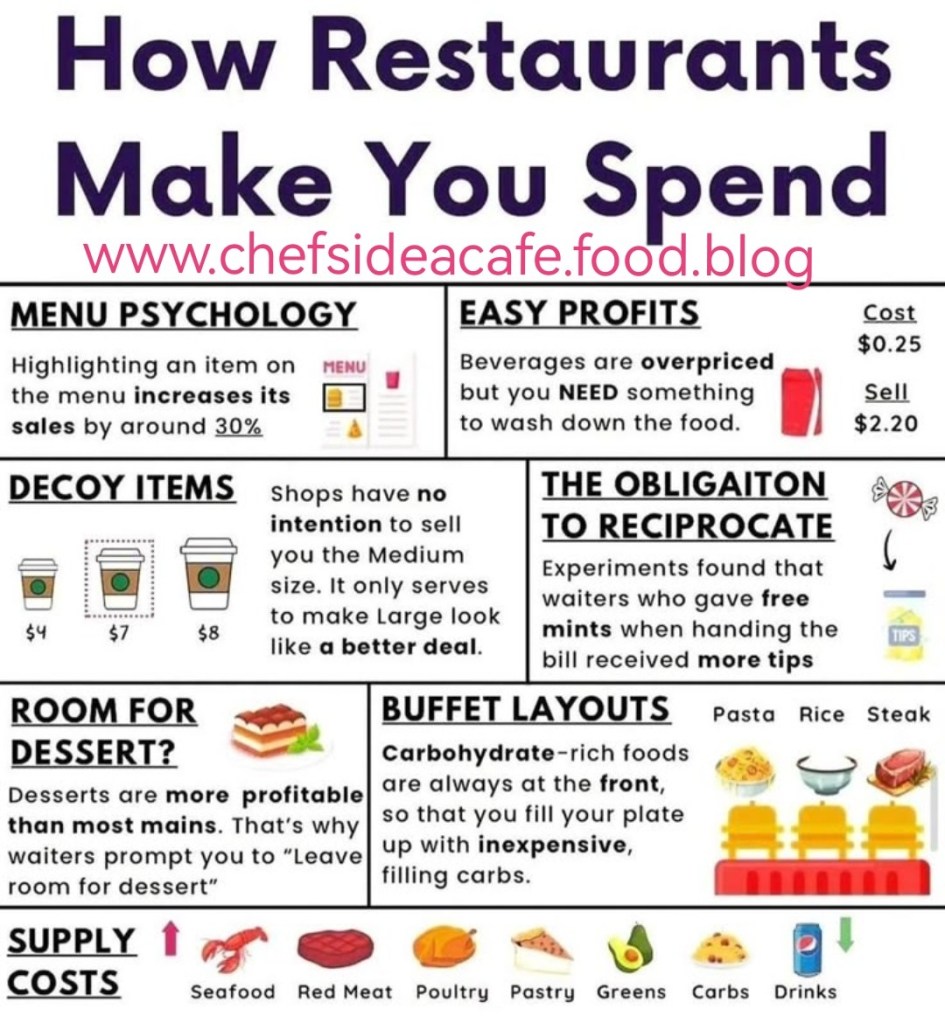
Restaurants employ a variety of psychological and design tricks to subtly encourage customers to spend more money. Here’s a breakdown of the most effective strategies they use, backed by industry insights and research:
1. Menu Design & Pricing Tricks
- No Dollar Signs: Omitting dollar signs (e.g., “9” instead of “$9”) makes prices feel less like money, leading to higher spending .
- Descriptive Language: Dishes with elaborate descriptions (e.g., “Grandma’s homemade apple pie”) sell 27% more than plain listings .
- Decoy Pricing: A high-priced “anchor” item (e.g., a $115 steak) makes other dishes seem like bargains .
- Golden Triangle Placement: Profitable items are placed in the upper-right corner or center, where eyes naturally linger .
2. Sensory & Environmental Manipulation
- Music: Classical music increases spending by making diners feel affluent, while fast-paced music speeds up turnover .
- Aromas: Sizzling fajitas or herb-infused butter scents trigger hunger and impulsive orders .
- Lighting: Dim lighting encourages longer stays and more orders, while bright lights rush diners .
3. Strategic Upselling
- Bar Wait: Guests invited to wait at the bar often order drinks (and later more food) due to alcohol-induced hunger .
- Odd-Portioned Appetizers: Serving 3 sliders for 4 people pressures groups to order extra .
- Dessert Carts: Visual displays of desserts increase sales by 30% compared to text-only menus .
4. Psychological Triggers
- Nostalgia: Dishes labeled “Mom’s meatloaf” or “Grandpa’s recipe” tap into emotional spending .
- Scarcity & Bundling: Limited-time specials or combo meals obscure true costs (e.g., “Wine pairings for $20 more!”) .
- Free Carbs: Bread baskets spike blood sugar, increasing hunger and subsequent orders .
5. Digital & Fast-Food Tactics
- Self-Serve Kiosks: Upsell prompts (e.g., “Add bacon?”) boost spending by 10% .
- Uncomfortable Seating: Hard chairs discourage lingering, speeding up table turnover .
Key Insight: Restaurants balance these tricks to avoid alienating customers—overuse can lead to buyer’s remorse and reduced repeat visits . For diners, awareness helps resist impulse spending.
For deeper breakdown read more .
 HEALTHY MEALS
Leave a comment