30 Laws of Eating In Rhythm step by step guide
By: chef ssentongo
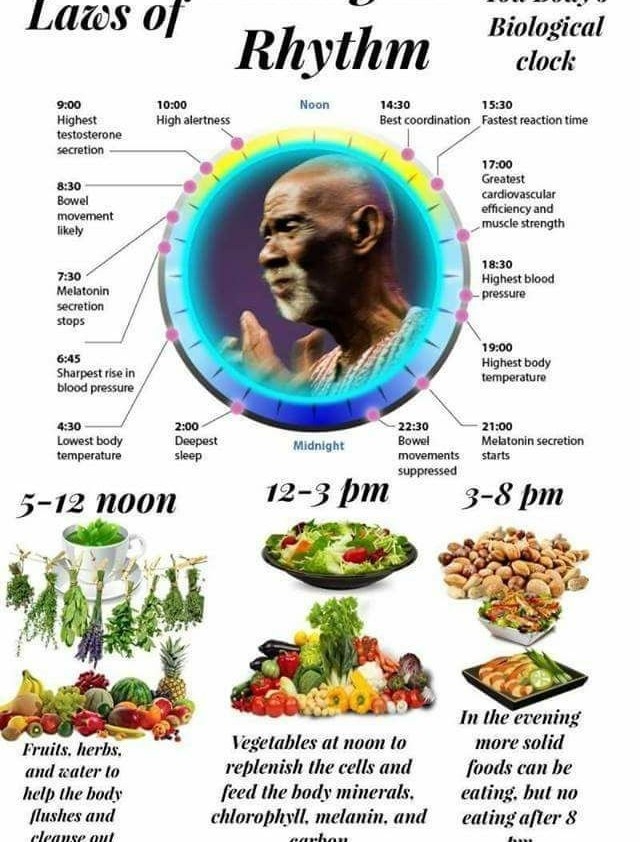
Based on the search results, there isn’t a specific “30 Laws of Eating in Rhythm” guide available, but I can synthesize key principles from circadian rhythm eating, time-restricted feeding, and metabolic health research to create a comprehensive step-by-step guide. Here’s a structured approach to aligning your eating with your body’s natural rhythms:
Foundational Principles of Eating in Rhythm
- Align Eating with Daylight
- Eat most meals during daylight hours (e.g., 8 AM–6 PM) to sync with your circadian rhythm. Avoid eating after sunset when melatonin rises and insulin sensitivity drops .
- Prioritize a 12-Hour Fast Overnight
- Fast for at least 12 hours nightly (e.g., 7 PM–7 AM) to allow metabolic repair and fat breakdown. Extend to 14–16 hours for deeper benefits .
- Front-Load Calories
- Make breakfast and lunch your largest meals, as metabolism is most efficient earlier in the day. Dinner should be lighter .
- Start Eating Within 1–2 Hours of Waking
- Capitalize on morning cortisol spikes and insulin sensitivity by eating a balanced meal early .
- Stop Eating 3+ Hours Before Bed
- Avoid late-night meals to prevent glucose spikes and disrupted sleep .
Practical Steps for Implementation
- Determine Your Chronotype
- Adjust meal times based on whether you’re a “Lion” (early riser), “Bear” (mid-range), or “Wolf” (night owl) .
- Balance Macronutrients
- Include protein, fiber, and healthy fats in every meal to stabilize blood sugar and energy .
- Avoid Processed Foods at Night
- Late-night carbs/sugars disrupt circadian rhythms and increase fat storage .
- Stay Hydrated Early
- Drink water upon waking to support morning metabolic activation .
- Limit Caffeine After Noon
- Caffeine disrupts cortisol and melatonin cycles, affecting sleep and next-day hunger .
Advanced Strategies
- Sync Meals with Temperature Rhythms
- Eat larger meals when body temperature peaks (midday) and lighter meals as it drops (evening) .
- Practice Consistency
- Eat at similar times daily to reinforce circadian entrainment .
- Use Light Exposure
- Morning sunlight helps regulate appetite hormones (leptin/ghrelin) .
- Avoid Midnight Snacks
- Night eating disrupts liver clocks and promotes insulin resistance .
- Opt for Early Workouts
- Exercise in the morning enhances metabolic flexibility for the day .
Troubleshooting & Adaptations
- For Shift Workers
- Mimic daylight eating patterns with blackout curtains and meal timing adjustments .
- Travel Adjustments
- Gradually shift meal times to new time zones to reduce jet lag .
- Manage Stress
- High cortisol disrupts circadian rhythms; prioritize mindful eating .
- Track Biomarkers
- Monitor glucose or sleep data to personalize timing (e.g., via InsideTracker) .
- Seasonal Adjustments
- Shorten eating windows in winter if natural light decreases .
Key Avoidances
- Skip Midnight Meals
- Late eating blunts fat oxidation and raises inflammation (hsCRP) .
- No Sugary Breakfasts
- Morning sugar crashes disrupt energy rhythms .
- Limit Alcohol at Night
- Alcohol fragments sleep and alters glucose metabolism .
- Avoid Over-Restriction
- Skipping meals leads to evening overeating and muscle loss .
- Don’t Ignore Hunger Cues
- Eat when genuinely hungry (e.g., morning), not out of habit at night .
Lifestyle Integration
- Prep Meals Ahead
- Batch-cook circadian-friendly meals (e.g., veggie-heavy lunches) .
- Wind Down Early
- Dim lights post-sunset to support melatonin and reduce cravings .
- Combine with Sleep Hygiene
- Aim for 7+ hours of sleep to stabilize hunger hormones .
- Experiment Gradually
- Start with a 12-hour fast, then adjust based on energy levels .
- Seek Professional Guidance
- Consult a dietitian for personalized plans, especially with metabolic conditions .
For further details, explore resources like Circadian Rhythm Fasting or Reclaiming Your Eating Rhythm . Let me know if you’d like deeper dives into specific steps!
Liver Detox Tea Recipe and Benefits

Here’s a comprehensive guide to Liver Detox Tea, including evidence-based recipes, benefits, and precautions, synthesized from medical and herbal research:
Key Benefits of Liver Detox Teas
- Supports Liver Function: Ingredients like milk thistle (silymarin) and dandelion root enhance bile production, aiding toxin removal and liver cell regeneration .
- Antioxidant & Anti-inflammatory: Turmeric (curcumin) and ginger reduce oxidative stress and inflammation linked to fatty liver disease .
- Digestive Aid: Peppermint and ginger soothe bloating and improve bile flow, aiding digestion .
- Hydration & Detox: Herbal teas promote hydration, helping kidneys flush toxins .
Note: While these teas may support liver health, they cannot reverse severe liver damage (e.g., cirrhosis) and should complement—not replace—medical treatment .
Top 5 Liver Detox Tea Recipes

1. Milk Thistle & Dandelion Root Tea
- Ingredients:
- 1 tsp milk thistle seeds (crushed)
- 1 tsp dried dandelion root
- 2 cups water
- Method: Simmer for 10 minutes, strain, and drink daily.
- Benefits: Silymarin in milk thistle protects liver cells; dandelion boosts bile flow .
2. Turmeric-Ginger Detox Tea

- Ingredients:
- ½ tsp turmeric powder
- 1-inch fresh ginger (grated)
- Pinch of black pepper (enhances curcumin absorption)
- Lemon juice & honey (optional)
- Method: Steep in hot water for 5–10 minutes.
- Benefits: Reduces liver inflammation and fat accumulation .
3. Green Tea with Lemon
- Ingredients: Green tea leaves + lemon slices.
- Benefits: Catechins in green tea lower liver fat; vitamin C aids detox .
4. Peppermint & Schisandra Berry Tea
- Ingredients: Peppermint leaves + 1 tsp schisandra berries.
- Benefits: Schisandra protects liver cells; peppermint aids digestion .
5. Burdock Root Tea
- Ingredients: 1 tbsp dried burdock root per cup of water.
- Benefits: Acts as a diuretic to flush toxins .
Precautions & Risks

- Avoid commercial detox teas with laxatives (e.g., senna) or unlisted ingredients, which may cause liver injury .
- Drug interactions: Milk thistle may interfere with blood thinners (e.g., warfarin); grapefruit juice affects medication metabolism .
- Consult a doctor if you have liver disease, are pregnant, or take medications .
Lifestyle Tips for Liver Health
- Hydrate: Drink 8–10 glasses of water daily .
- Limit alcohol & processed foods: Reduce toxin load on the liver .
- Exercise & balanced diet: Prioritize fiber-rich foods (e.g., oats, berries) and omega-3s (fatty fish) .
For severe liver conditions, always seek medical advice. Herbal teas are supportive but not curative .
Would you like a customized blend based on specific health goals?
 HEALTHY MEALS
Leave a comment