HOW TO CALCULATE FOOD COST
By: chef ssentongo
Of course! Calculating food cost is a fundamental skill for anyone in the food service industry, from restaurant owners to home cooks looking to budget. Here’s a comprehensive guide broken down into simple steps.
The Two Main Calculations: Food Cost Percentage & Plate Cost
There are two primary ways to calculate food cost: as a percentage (for overall business health) and as a per-plate cost (for pricing individual menu items).
Part 1: Calculating Your Overall Food Cost Percentage
This is a macro-level look at how much of your revenue is spent on food ingredients over a specific period (e.g., a week or a month). It’s a key metric for profitability.
The Formula:
Food Cost % = (Beginning Inventory + Purchases – Ending Inventory) / Total Food Sales
Step-by-Step Breakdown:
- Determine Your “Beginning Inventory” Value ($)
· This is the dollar value of all the food in your kitchen at the start of the period (e.g., on the 1st of the month).
· You must do a physical count of every item and multiply it by its purchase cost. - Add Your “Purchases” Value ($)
· This is the total amount you spent on food supplies during that same period. Pull this number from your invoices or accounting software. - Determine Your “Ending Inventory” Value ($)
· At the end of the period, do another physical count of all the food in your kitchen. This is your ending inventory. - Calculate Your “Cost of Goods Sold” (CoGS)
· This is the actual value of the food you used during the period.
· CoGS = Beginning Inventory + Purchases – Ending Inventory
· Example: You started with $10,000 in food, bought $5,000 more, and ended with $8,000. Your CoGS is: $10,000 + $5,000 – $8,000 = $7,000. - Find Your “Total Food Sales” ($)
· This is the total revenue generated from food only (exclude alcohol, merchandise, etc.) during that period. Get this from your point-of-sale (POS) system. - Plug the Numbers into the Formula
· Food Cost % = CoGS / Total Food Sales
· Example: Your CoGS was $7,000 and your Food Sales were $25,000.
· $7,000 / $25,000 = 0.28
· Multiply by 100 to get a percentage: 0.28 x 100 = 28%
What’s a Good Food Cost Percentage?
· Full-Service Restaurants: 28-35%
· Fast-Casual/Restaurants: 25-30%
· Pizza Places: Can be as low as 20-25% due to low-cost ingredients.
· Bars: Focus on liquor cost, which is typically 15-20%.
A percentage that is too high means you’re not pricing your menu correctly or are losing money to waste, theft, or poor portioning. A percentage that is too low might mean your prices are too high, which could scare away customers.
Part 2: Calculating Plate Cost (Cost per Menu Item)
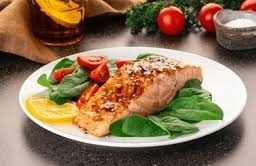
This is a micro-level calculation to determine the exact cost to make one single serving of a menu item. This is essential for setting prices.
The Formula:
Plate Cost = Sum of Costs for All Ingredients in a Single Serving
Step-by-Step Breakdown:
- List Every Ingredient in the dish. Be precise. This includes oil, butter, spices, and garnishes.
· Example: Burger with Fries:
· Burger bun
· Ground beef patty
· Cheese slice
· Lettuce
· Tomato slice
· Onion slice
· Condiments (ketchup, mayo)
· Side of fries
· Oil for cooking - Calculate the Cost of Each Ingredient.
· You rarely buy one tomato or a single gram of mayo. You buy in bulk. You need to find the cost of the unit you use.
· Formula: Ingredient Cost = (Purchase Price / Total Unit Size) x Recipe Amount
· Example for Ground Beef:
· You buy a 5kg case of ground beef for $50.
· Your burger patty is 150g.
· First, find the cost per gram: $50 / 5000g = $0.01 per gram
· Then, multiply by the amount used: $0.01/g x 150g = $1.50 for the patty. - Account for Waste and Trim.
· If you buy a whole head of lettuce for $2 and after trimming, you only get 80% usable product, your usable cost for lettuce is higher.
· Adjusted Cost = Purchase Price / Usable Yield
· $2.00 / 0.80 = $2.50. Now you use this $2.50 value to calculate the cost of the shreds you put on the burger. - Add Up All the Ingredient Costs.
· Create a spreadsheet. For the burger example:
· Bun: $0.35
· 150g Beef Patty: $1.50
· Cheese: $0.40
· Lettuce, Tomato, Onion: $0.45
· Condiments: $0.15
· Fries: $0.75
· Total Plate Cost = $0.35 + $1.50 + $0.40 + $0.45 + $0.15 + $0.75 = $3.60 - Price Your Menu Item.
· A common pricing method is to use your Target Food Cost Percentage.
· Ideal Menu Price = Plate Cost / Target Food Cost %
· Example: If your target food cost is 30%, your burger price should be: $3.60 / 0.30 = $12.00.
· You should also check competitor prices to ensure your price is market-appropriate.
Why This Is So Important (& Common Causes of High Food Cost)
· Profitability: This is the difference between success and failure.
· Pricing: Allows you to set intelligent, profitable prices.
· Identifying Problems: A high percentage flags issues like:
· Food Waste: Over-prepping, spoilage, poor storage.
· Theft: Both by staff and customers.
· Inconsistent Portioning: Kitchen staff giving away too much food.
· Inefficient Recipes: Menu items that are too expensive to make.
· Supplier Prices: Rising costs from your vendors that you haven’t accounted for.
Pro Tips for Lowering Your Food Cost
- Portion Control: Use scales, scoops, and ladles to ensure every plate is identical.
- Track Waste: Implement a waste log to see what gets thrown out and why.
- Negotiate with Suppliers: Build relationships and shop around for better prices.
- Design a Smart Menu: Feature dishes with low-cost, high-profit ingredients and use cross-utilization (using the same ingredient in multiple dishes to reduce waste).
- Conduct Regular Inventory Checks: You can’t manage what you don’t measure. Weekly counts are best practice.
By mastering these calculations, you move from guessing to making informed, profitable decisions for your food business.
3 FOOD COST RULES
Of course. Here are 3 fundamental, non-negotiable rules for controlling food cost, explained for anyone from a restaurant owner to a line cook.
Rule #1: You Can’t Manage What You Don’t Measure
This is the golden rule of food cost. Intuition and guesswork will lose you money.
· What it means: Every single ingredient that enters your kitchen must be tracked, from a case of prime rib to a single lemon. This is done through consistent, scheduled inventory counts.
· How to do it:
- Count Everything: Once a week (or at least once a month), do a full physical count of every item in your walk-in, freezer, and dry storage.
- Track Purchases: Keep every invoice and log all food purchases during that period.
- Calculate Your Food Cost Percentage: Use the formula:
(Beginning Inventory + Purchases – Ending Inventory) / Food Sales = Food Cost %
· Why it works: This process reveals your true Cost of Goods Sold (CoGS). Without it, you’re flying blind. A rising food cost percentage is a direct signal that you have a problem with waste, theft, or portioning that you need to investigate.
Rule #2: Perfect Portioning is Profit

Inconsistent portions are a silent killer of profitability. Giving away “a little extra” on every plate adds up to a lot of lost revenue over a year.
· What it means: Every ingredient in every dish must be measured precisely, every time. This applies to a sprinkle of grated cheese, a scoop of fries, and a ladle of sauce just as much as it does to the main protein.
· How to do it:
- Use Tools: Equip your kitchen with scales, scoops, ladles, and portioning tools. A digital scale is your best friend.
- Create Spec Sheets: Have a photo and detailed recipe for every menu item that lists the exact weight or volume of each component.
- Train and Enforce: Train every cook on these standards and make adherence part of the kitchen culture. A 7-ounce portion of salmon is not 6.5 ounces and not 7.5 ounces.
· Why it works: Consistent portioning ensures your Plate Cost (the cost to make one menu item) remains stable and predictable. This allows you to set an accurate price and guarantee the same profit margin on every single order that goes out the pass.
Rule #3: Waste is Theft (Track It and Attack It)
Food that ends up in the trash bin is literally money you are throwing away. Managing waste is not just about being “green”; it’s a direct financial imperative.
· What it means: You must treat wasted food with the same seriousness as you would stolen cash from the register. The goal is to identify why waste is happening and systematically eliminate those reasons.
· How to do it:
- Use a Waste Log: Keep a clipboard or notebook in the kitchen. Any time food is thrown out, the staff must log it: what was thrown out, how much, why, and who did it.
- Analyze the Log: Common reasons will emerge:
· Spoilage: You’re over-ordering or not storing properly.
· Trim/Prep Waste: Your recipes aren’t using ingredients efficiently.
· Kitchen Mistakes: Burnt, dropped, or incorrectly made food.
· Over-Prepping: You cooked too much and it died on the line. - Act on the Data: Use the log to fix the root causes—adjust order quantities, improve storage, train staff, or redesign menus to use trim (e.g., using vegetable scraps for stock).
· Why it works: A waste log makes an invisible cost visible. It holds the team accountable and turns waste reduction from a vague concept into a concrete, solvable problem. Attacking waste directly protects your bottom line.
In short: Measure your inventory, control your portions, and track your waste. Master these three rules, and you master your food cost.
 HEALTHY MEALS
Leave a comment