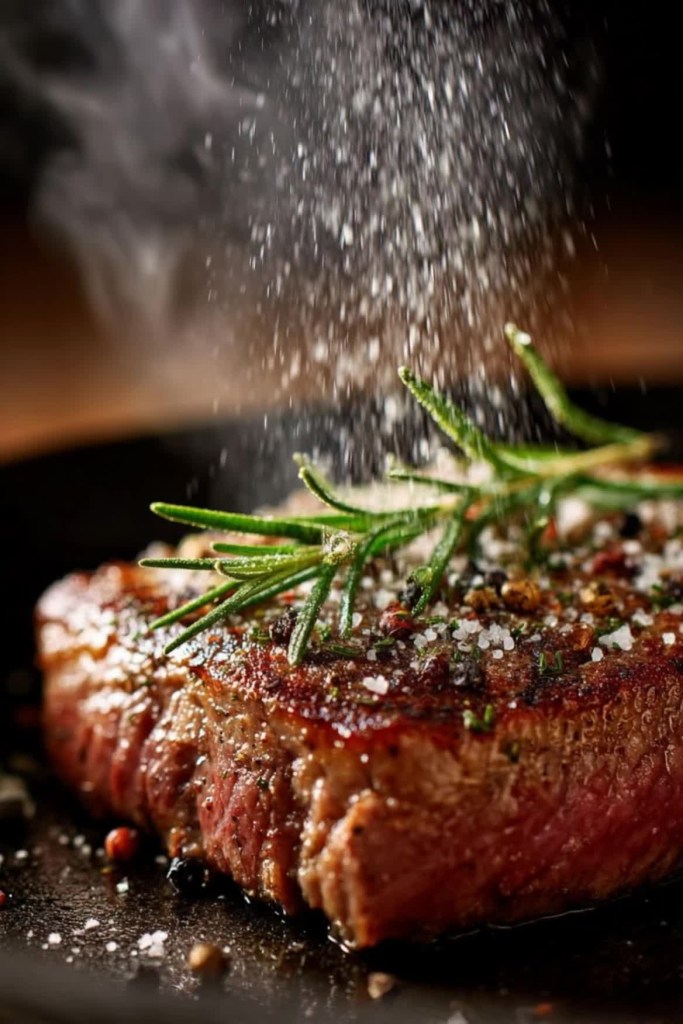
That’s a Cast-Iron Rosemary Butter-Basted Steak — thick-cut, perfect medium-rare, flaky salt shower, steam rising, rosemary sprig. Pure steakhouse drama.
Rosemary Butter-Basted Ribeye / NY Strip
Serves 2 | Time: 25 min + 40 min dry-brine
1. Ingredients
For the Steak
- 2 ribeye or NY strip steaks, 400g each, 4cm thick
- 2 tbsp kosher salt
- 1 tbsp black peppercorns + pink peppercorns, crushed
- 2 tbsp high-smoke oil, avocado or canola
For Butter-Basting
- 4 tbsp unsalted butter
- 4 garlic cloves, smashed
- 3 sprigs fresh rosemary
- 2 sprigs thyme, optional
To Finish
- Flaky sea salt, like Maldon
- Extra cracked pepper
- Fresh rosemary sprig for garnish
2. Method
1. Dry-brine: Salt steaks heavily on all sides. Place on wire rack in fridge, uncovered, 40 min to overnight. This pulls out moisture, then reabsorbs for deep seasoning + dry surface = better crust. Take out 30 min before cooking.
2. Heat the pan: Cast iron on high 5-7 min until smoking. You should barely be able to hold your hand 5cm above it for 2 sec. Hot pan = sear, not steam.
3. Sear: Pat steaks bone-dry. Oil the steaks, not the pan.
- Lay away from you. Don’t move 3 min. You want deep brown crust like the photo.
- Flip, 3 min other side.
- Sear edges 30 sec each with tongs to render fat.
4. Butter-baste: Drop heat to medium. Add butter, garlic, rosemary. Once foaming, tilt pan. Spoon hot butter over steak continuously 1-2 min. This bastes flavor + cooks top gently. Target temps:
- Rare: 49°C, pull at 46°C
- Med-rare: 54°C, pull at 51°C — like the photo
- Medium: 60°C, pull at 57°C
5. Rest: Transfer to board. Pour pan butter over. Rest 10 min tented with foil. Temp rises 3-5°C and juices redistribute. Don’t skip or it bleeds out.
6. Serve: Slice against grain if sharing. Or serve whole like the photo. Shower with flaky salt while steaming hot so it sticks but doesn’t melt instantly. Crack pepper over. Rosemary sprig on top.
3. Tips for the Photo Look
- Steam: Steak must be fresh from pan, 60°C+ internal. The salt hitting hot fat = visible steam + sizzle. Have camera ready.
- Crust: Dry surface + ripping hot pan + don’t move it. Moisture is the enemy of Maillard browning. Pat dry after dry-brine.
- Flaky salt shower: Use Maldon or Jacobsen. Pinch high above steak and let it fall. The photo catches salt mid-air — large flakes show up on camera.
- Pink peppercorns: Adds color contrast. Mix with black for visual pop. Crack, don’t grind fine.
- Rosemary: Fresh sprig, not dried. Lay on steak last 30 sec of basting so it’s aromatic but still bright green.
- Juicy edge: Cook to med-rare so you get that pink edge-to-edge with just a seared rim, like the photo. Thick steak + high heat = gradient.
4. Key Notes
Grey band inside: Heat too low, or you didn’t rest. Hot sear + thick cut gives pink edge-to-edge. Reverse sear for steaks >5cm.
No crust: Wet steak, cold pan, or you moved it. Pan should smoke. If it sticks, it’s not ready to flip.
Steak tough: Cut with grain, or low-quality meat. Always slice against grain. Prime or Choice grade with marbling.
Butter burnt: Added too early or heat too high during baste. Butter solids burn at 120°C. Drop heat before adding.
Too salty: You salted twice. Dry-brine is your salt. Only flaky salt to finish, not more kosher salt.
No thermometer: Use finger test, but it’s unreliable. $15 instant-read pays for itself in one saved steak.
5. Why This Works
Thick ribeye/NY strip = fat marbling that renders and self-bastes, keeping meat juicy at high heat. Dry-brining dissolves surface proteins, letting salt penetrate while drying exterior for Maillard reaction — that’s the deep brown crust. Smoking-hot cast iron gives maximum surface contact for sear. Butter-basting adds fat-soluble flavor compounds from garlic + rosemary, and gentle heat cooks top without flipping. Rosemary + thyme contain aromatic oils released in hot butter. Resting lets muscle fibers relax and reabsorb juices instead of spilling on plate. Flaky salt adds crunch + burst of salinity, while cracked pepper adds volatile oils + texture. Pink edge-to-edge means you controlled heat: hard sear outside, gentle rise inside.
Drink pairing: Bold Cabernet Sauvignon or Malbec. Tannins cut fat, dark fruit matches char.
Sides: Doesn’t need much. Creamed spinach, roasted garlic mash, or just the steak like a boss.
Reverse-sear for thicker cuts: Oven 120°C until 43°C internal, then sear 90 sec per side. Perfect edge-to-edge pink.
Want how to nail the temp without a thermometer, or a peppercorn cream sauce to go with it?
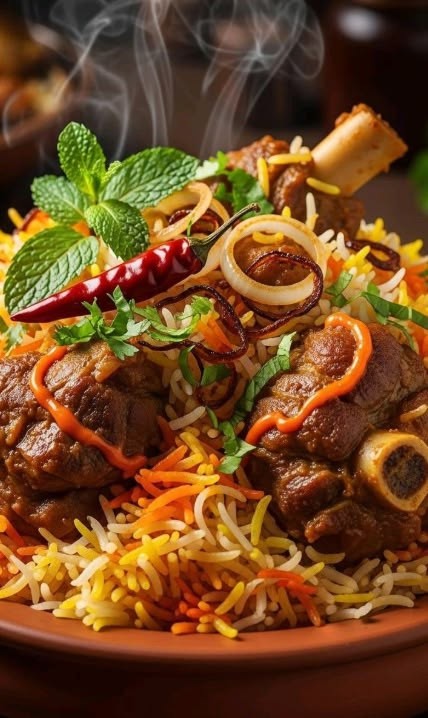
* > THAT’S A MUTTON DUM BIRYANI — SLOW-COOKED bone-in lamb shanks layered with saffron rice, fried onions, mint, and that signature steam rising. The orange/yellow streaks, crispy onions, and mint garnish in your photo are classic Hyderabadi style.
Royal Mutton Dum Biryani
Serves 6 | Time: 3 hours, 45 min active
1. Ingredients
For the Mutton Marinade
- 1kg mutton/lamb shanks or shoulder, bone-in, cut 5cm pieces
- 1 cup thick yogurt, hung 30 min
- 2 tbsp ginger-garlic paste
- 2 tsp red chili powder, 1 tsp turmeric
- 1 tbsp biryani masala or garam masala
- 2 tsp salt
- Juice of 1 lemon
- ½ cup fried onions, crushed — see below
For the Rice
- 500g basmati rice, aged, soaked 30 min
- 3 bay leaves, 6 green cardamom, 6 cloves, 2” cinnamon, 1 star anise
- 1 tbsp salt
- 1 tbsp ghee
For Layering
- 3 large onions, thinly sliced, fried until deep golden — birista
- ½ cup mint leaves, ½ cup cilantro, chopped
- ¼ cup warm milk + large pinch saffron, soaked 10 min
- 3 tbsp ghee + 2 tbsp reserved fried-onion oil
- 2 green chilies, slit
- 1 tbsp rose water + ½ tsp kewra water, optional but authentic
- 1 dried red chili, fried onion rings for garnish
For Dum Sealing
- Dough: 1 cup wheat flour + water
2. Method
1. Marinate mutton: Mix all marinade ingredients. Cover, fridge 4 hours minimum, overnight best. Acid + yogurt tenderizes; fried onions add depth.
2. Fry onions: Slice onions evenly. Deep fry on medium until deep golden brown, 8-10 min. Don’t burn. Drain on paper. Reserve oil. This is birista — half goes in marinade, half for layering. Crispy onions = key flavor.
3. Par-cook rice: Boil 3L water with whole spices, salt, ghee. Should taste salty like sea. Add drained rice. Cook exactly 5 min — 70% done. Grain should break with bite but still firm. Drain, spread on tray to stop cooking.
4. Cook mutton base: In heavy pot/handi, add marinated mutton. Cook on high 5 min, then medium-low 25 min covered. It should be 80% done, thick gravy clinging. No water needed — yogurt + meat juices are enough.
5. Layer for dum: Off heat. On mutton, layer:
- Half rice
- Half birista, half mint/cilantro, green chilies
- Remaining rice
- Saffron milk drizzled for orange/yellow streaks like the photo
- Remaining birista, herbs, ghee, onion oil, rose/kewra water
6. Dum cooking: Seal lid with dough rope. No steam should escape.
- High heat 5 min to build steam
- Then low heat 25-30 min on tawa/griddle under pot to prevent burning
- Rest 15 min, don’t open. The steam in your photo happens here.
7. Serve: Break seal at table. Gently mix from bottom, lifting so rice doesn’t break. Top with fresh mint, fried onion rings, whole red chili like the photo. Drizzle optional orange food color mixed with ghee for that extra streak.
3. Tips for the Photo Look
- Saffron streaks: Don’t mix saffron milk fully. Drizzle over top rice layer only. Some grains turn orange, some stay white/yellow = restaurant look.
- Steam: Biryani must be piping hot when opened. The dum seal traps it. Break at table for drama.
- Crispy onions: Fry on medium, not high. High = burnt outside, raw inside. They should be deep mahogany, not pale. Save some for final garnish.
- Meat on bone: Shanks in the photo show marrow. Bone-in = flavor + that visual. Marrow melts into rice.
- Mint garnish: Fresh mint sprig + whole red chili on top is classic Hyderabadi plating.
- Clay handi: Serve in earthenware if you have it. Holds heat and looks authentic like your pic.
4. Key Notes
Soggy rice: You overcooked rice before dum. It should be 70% — firm bite. Or too much water in mutton. Gravy should be thick, not curry.
Burnt bottom: No tawa under pot, or heat too high during dum. Always use diffused low heat.
Bland: Didn’t salt rice water enough. Rice water should be “sea-salty” — that’s where rice gets seasoned.
Dry meat: Used lean cuts or didn’t marinate long. Shoulder/shank has fat + collagen = juicy after dum. Marinade minimum 4 hrs.
No color: Saffron not bloomed, or you used turmeric. Soak saffron in warm milk 10 min. Optional: 2 drops orange food color for vibrancy.
Onions soft: Added to marinade while hot. Cool birista fully before crushing into marinade, or it turns mushy.
5. Why This Works
Bone-in mutton = collagen breaks down during dum into gelatin, making gravy rich and meat fall-apart. Yogurt + lemon acid tenderizes and keeps meat moist. Aged basmati = long grains that don’t stick; soaking prevents breaking. Par-cooking rice means it finishes steaming in meat juices, absorbing flavor without turning mushy. Dum seal = trapped steam cooks rice + infuses saffron/aromatics through every grain. Whole spices in rice water perfume it; fried onions = Maillard compounds for deep umami. Saffron + kewra + rose = classic Mughlai aroma profile. Ghee + onion oil = fat carries flavor and gives glossy finish.
Serve with: Mirchi ka salan, raita, or boiled egg. Papad on side.
Shortcut: Use pressure cooker for mutton 15 min, then layer. But true dum taste needs slow sealing.
Want a chicken version that’s ready in 90 min, or how to scale this for 20 people without losing dum flavor?
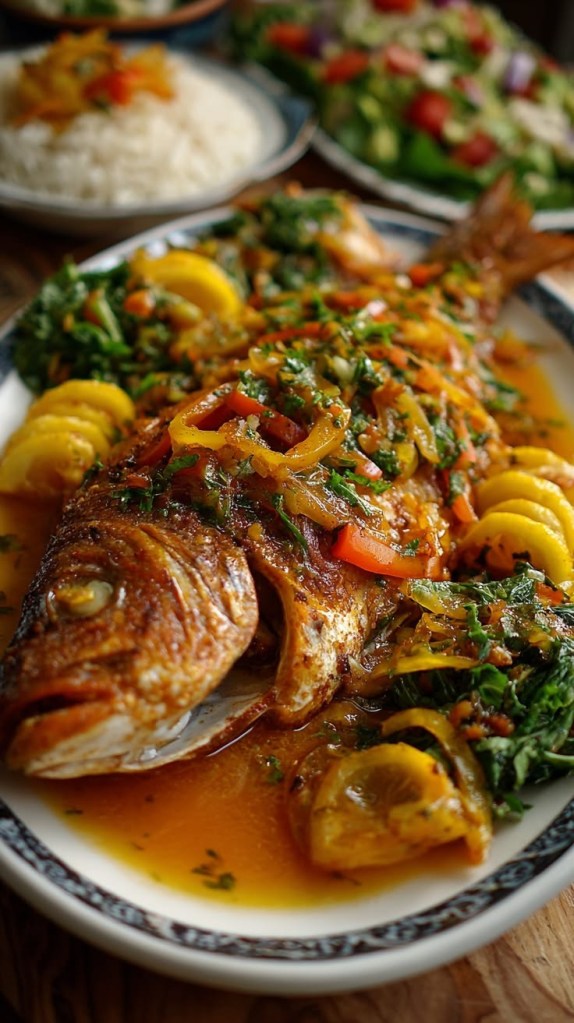
* > THAT’S JAMAICAN ESCOVITCH FISH — whole red snapper fried crispy, then smothered in spicy pickled pepper-onion sauce with carrots, thyme, and allspice. Served with callaloo and rice like the photo. Sweet, sour, spicy, crunchy.
Escovitch Red Snapper
Serves 2-3 | Time: 45 min
1. Ingredients
For the Fish
- 1 whole red snapper, 1-1.2kg, scaled + gutted, fins trimmed
- 2 tsp salt, 1 tsp black pepper
- 1 tsp allspice, ground
- 1 tsp garlic powder
- 1 tbsp fresh lime juice
- 1 cup neutral oil for frying
- ¼ cup flour or cornstarch, for dredging
For the Escovitch Sauce
- 1 large white onion, sliced thin
- 1 carrot, julienned
- 1 red bell pepper + 1 yellow bell pepper, sliced
- 2 scotch bonnet peppers, sliced, seeds in for heat
- 4 garlic cloves, sliced
- 6 pimento berries/allspice berries, whole
- 3 sprigs fresh thyme
- 1 cup white vinegar
- ½ cup water
- 1 tbsp brown sugar
- 1 tsp salt
- ½ tsp black pepper
For Serving
- 1 lemon, sliced into rounds
- ½ cup fresh parsley + cilantro, chopped
- Steamed callaloo or sautéed kale
- White rice
2. Method
1. Prep fish: Pat snapper bone-dry inside and out. Score 3 diagonal slashes each side, 1cm deep. This helps seasoning penetrate + cooks evenly. Rub with lime juice, salt, pepper, allspice, garlic powder. Let sit 15 min.
2. Fry fish: Heat 1cm oil in large skillet to 180°C. Lightly dredge fish in flour — shake off excess. This = extra crispy skin.
- Carefully lay in oil. Fry 6-7 min per side until deep golden brown and crispy, like the photo. Baste head/tail with hot oil.
- Internal temp 63°C at thickest part. Drain on wire rack, not paper, so it stays crisp.
3. Make escovitch: Pour off all but 2 tbsp oil from pan. Medium heat.
- Sauté onion, carrot, bell peppers 2 min until just softened but still crisp.
- Add scotch bonnet, garlic, pimento berries, thyme. 30 sec until fragrant.
- Add vinegar, water, sugar, salt, pepper. Simmer 2-3 min. Taste: should be sharp, spicy, slightly sweet. Adjust sugar/vinegar.
4. Assemble: Place fried fish on platter. Pour hot escovitch + all the pickled veg over fish while it’s still sizzling. The hot vinegar hits the fish and creates that glossy sauce you see in the photo.
5. Garnish: Tuck lemon slices under and around fish. Shower with chopped herbs. Serve immediately with callaloo and rice on side.
3. Tips for the Photo Look
- Crispy skin: Fish must be bone-dry before frying. Moisture = steam = soggy. Flour dredge gives that golden crust. Oil at 180°C, not lower.
- Vibrant sauce: Don’t overcook veg. 2-3 min max. Onions should be translucent, peppers still bright, carrots with bite. That’s the color pop.
- Glossy escovitch: Hot vinegar-oil emulsion poured over hot fish = shine. The oil from frying peppers floats on top and looks like the photo.
- Lemon wheels: Slice thin and tuck around fish before sauce. They soften slightly and look like they were cooked with it.
- Herb shower: Add parsley/cilantro after sauce so it stays green, not wilted. Extra on callaloo too.
- Whole fish drama: Head + tail on. Score marks hold sauce. Spoon extra veg into slashes.
4. Key Notes
Fish sticks/breaks: Oil not hot enough, or you moved it too soon. Let crust form 5-6 min before flipping. Use 2 spatulas to turn.
Soggy skin: Sauce sat too long before serving. Escovitch fish is meant to be eaten immediately. Sauce softens crust over time — that’s traditional.
Too sour: Cut vinegar with more water/sugar. Jamaican style is sharp, but adjust to taste. 1:1 vinegar:water is milder.
Not spicy: Left seeds out of scotch bonnet. Heat is in seeds/ribs. Or sub habanero. Wear gloves — those oils burn.
Muddy veg: Overcooked. Escovitch veg should be “pickle-crisp,” not soft. 2 min sauté only.
Fish tastes fishy: Wasn’t fresh, or didn’t use lime. Lime juice neutralizes. Buy fish with clear eyes, red gills, ocean smell.
5. Why This Works
Whole snapper = skin protects flesh while frying, bones add flavor, presentation is dramatic. Scoring lets salt/spices penetrate and heat reach center. Flour dredge = starch gelatinizes in hot oil for crust that stays crisp under sauce. Hot oil at 180°C = instant sear, minimal oil absorption. Escovitch is a “pickle” sauce: vinegar preserves and sharpens, sugar balances acid, allspice/pimento berries = warm Caribbean flavor, thyme = earthy note, scotch bonnet = fruity heat. Pouring hot over fried fish = temperature shock that makes fish absorb flavor while oil in sauce keeps skin glossy. Carrots/onions/peppers add crunch + sweetness to cut vinegar. Lemon adds fresh acid, herbs add color + brightness. Callaloo = bitter green that balances rich fried fish.
Traditional note: Escovitch came from Spanish escabeche — fish preserved in vinegar. Jamaicans added scotch bonnet + pimento. It’s meant to be tangy and hot.
Sides: Festival, bammy, or white rice. Cold Red Stripe beer.
Want a baked version with less oil, or how to make it with fillets instead of whole fish?


Leave a comment