Are Nutrition Coaches, Nutritionists, and Registered Dietitians the Same?
Authord byt: chef ssentongo
Nutrition Coaches, Nutritionists, and Registered Dietitians are distinct roles with different qualifications, scopes of practice, and regulatory standards.
Each role plays a unique part in promoting health and wellness, so it’s important to choose the right professional based on your specific needs. If you have a medical condition or need detailed nutritional advice, a Registered Dietitian would be the most qualified professional to consult.
Do you have any specific dietary goals or concerns you’re looking to address?
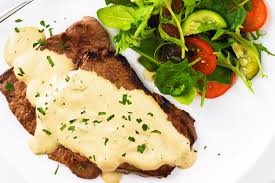
Sure! Here’s a step-by-step recipe for making Steak Diane with a delicious Diane sauce:
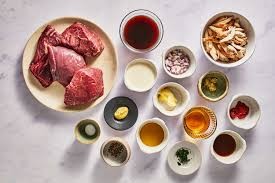
Ingredients:
For the Steak:
4 rib-eye steaks (about 200-225g/7-8oz each)
Olive oil
Sea salt and freshly ground black pepper
For the Diane Sauce:
2 banana shallots, finely diced
180g/6¼oz button mushrooms, sliced
2 garlic cloves, grated
Knob of unsalted butter
160ml/5½fl oz good brandy or cognac
2 tbsp Worcestershire sauce
2 tsp Dijon mustard
300ml/½ pint double cream
60g/2¼oz fresh flat-leaf parsley, finely chopped
Instructions:
Prepare the Steaks:
Allow the steaks to reach room temperature.
Rub them with a little olive oil and season with sea salt and freshly ground black pepper.
Heat a non-stick frying pan over high heat until it starts to smoke.
Add a splash of oil followed by the steaks and sear them for around 3 minutes on each side for a medium-rare finish.
Remove the steaks from the pan and let them rest on a rack in a warm place.
Make the Diane Sauce:
In the same pan, fry the shallots in a little more oil on medium heat until they start to soften.
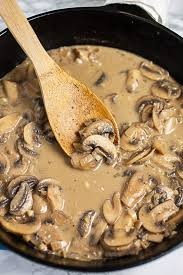
Add the mushrooms and cook for 2 minutes before adding the garlic and butter.
Once the mushrooms are soft and slightly golden, add the brandy or cognac and carefully set it alight by tilting the pan towards the flame on a gas hob (or use a match). Caution: Keep your face and hair away from the flames and do not leave unattended.
Once the flames have died down, add the Worcestershire sauce followed by the mustard.
Cook the sauce for 90 seconds and then stir in the double cream.
Reduce on medium-high heat until slightly thickened, about 2-3 minutes.
Stir in the parsley, taste the sauce, and season with salt and pepper.
Steak Diane is a classic dish with an interesting history that dates back to the early 20th century. Here are some key points about its origins and evolution:
Origins:
Invented in the 1930s: Steak Diane is believed to have been created in London during the 1930s.
Steak Diane remains a beloved dish for its combination of tender beef and a rich, flavorful sauce. Its history reflects a blend of culinary traditions and the glamour of mid-20th-century dining.
Is there anything else you’d like to know about this dish or any other culinary history?
Enjoy your cooking!
Do you have any other recipes you’d like to try or any specific cooking tips you need?
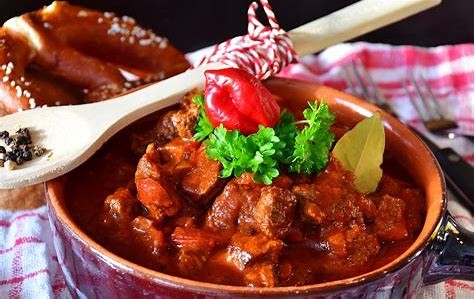
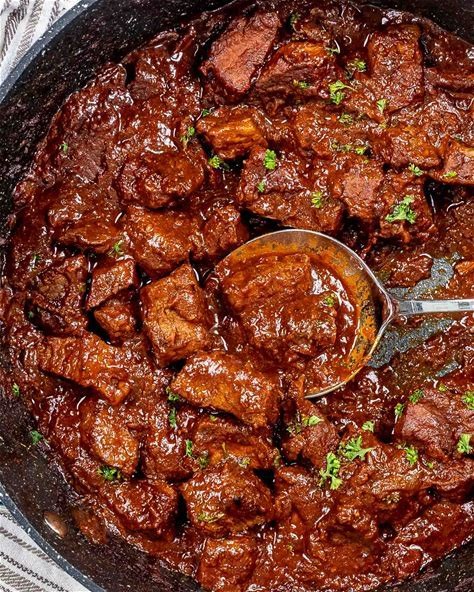
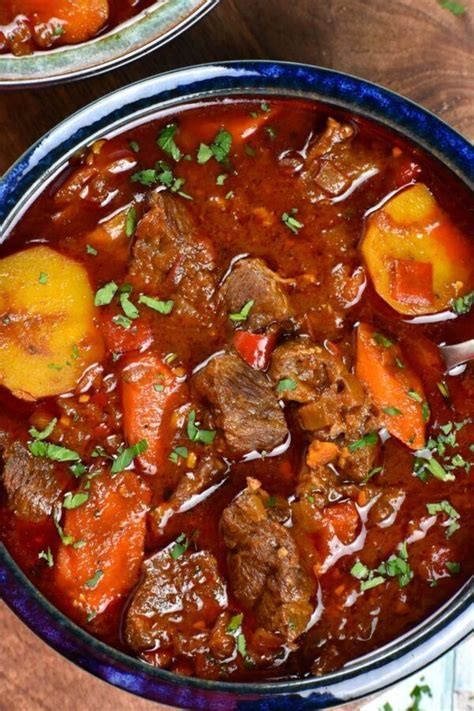
Hungarian Goulash is a traditional Hungarian soup or stew made with beef, vegetables, and a generous amount of paprika. It’s known for its rich, hearty flavor and vibrant red color, thanks to the paprika. This dish has its roots in the 9th century and was originally prepared by Hungarian shepherds.
Here’s a step-by-step guide to making authentic Hungarian Goulash:
Ingredients:
2 tablespoons lard or oil
2 large onions, finely chopped
2 cloves garlic, minced
1 tablespoon caraway seeds
2 tablespoons sweet Hungarian paprika
1 teaspoon black pepper
2 bay leaves
2 pounds beef chuck, cut into 1-inch cubes
2 large tomatoes, chopped
2 bell peppers, chopped
4 cups beef broth
2 large carrots, sliced
2 parsnips, sliced
2 potatoes, diced
Salt to taste
Fresh parsley, chopped (for garnish)
Instructions:
Heat the lard or oil in a large pot or Dutch oven over medium heat. Add the onions and cook until they are soft and translucent, about 8 minutes.
Add the garlic, caraway seeds, black pepper, and bay leaves. Cook for another 2 minutes, stirring frequently.
Remove the pot from the heat and stir in the paprika. Be careful not to burn the paprika as it can become bitter.
Add the beef cubes to the pot and stir until they are well coated with the paprika mixture. Return the pot to medium heat and cook until the beef starts to brown.
Add the tomatoes and bell peppers. Pour in the beef broth, ensuring the meat and vegetables are covered by about an inch of liquid. If needed, add more broth or water.
Bring the mixture to a boil, then reduce the heat to low. Cover the pot and let it simmer for about 1.5 hours, or until the beef is tender.
Add the carrots, parsnips, and potatoes. If necessary, add more hot water to ensure the vegetables are covered. Season with salt to taste.
Continue to simmer for another 30 minutes, or until the vegetables are tender.
Taste and adjust the seasoning if needed. Remove the bay leaves before serving.
Garnish with fresh parsley and serve hot, preferably with a slice of crusty bread.
What are some variations of Goulash?
Goulash has many variations across different cultures and regions.
Here are some popular ones:
1. American Goulash
This version is quite different from the Hungarian original. It’s a one-pot dish made with ground beef, tomatoes, and elbow macaroni.
For those who prefer a meatless option, vegetarian goulash can be made with a variety of vegetables like bell peppers, tomatoes, carrots, and potatoes.
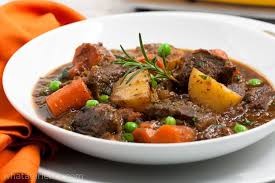
Making a hearty Irish beef stew is a delightful culinary adventure. Here’s a step-by-step guide to create a comforting bowl of goodness:
Brown the Beef:
Heat 1 tablespoon of vegetable oil in a large saucepan over high heat.
Cut 1 kg (about 2.2 lbs) of braising steak into 2.5 cm (1 inch) chunks.
Brown the beef in batches, ensuring the pan isn’t too full. Set aside on a plate.
Sauté the Vegetables:
While the beef is frying, peel and chop:
2 onions
4 large carrots
3 celery stalks
In the same saucepan, heat the remaining oil and sauté the onion, celery, and carrot for 4–5 minutes until softened. Scrape any flavorful bits from the pan.
Combine Beef and Vegetables:
Mix the browned beef with the sautéed vegetables.
Take the pan off the heat and transfer the meat and veggies to a large ovenproof dish.
Add Stock and Potatoes:
Pour 1 liter (1¾ pints) of beef stock (made from stock cubes) over the meat and vegetables.
Peel and slice 900g (about 2 lbs) of potatoes into ½ cm (¼ inch) thick slices.
Arrange the potato slices over the top of the beef.
Finishing Touches:
Dot 25g (1 oz) of unsalted butter over the potatoes.
Cover the dish tightly with foil.
Bake at 200°C (180°C Fan/Gas 6) for 1 hour.
Remove the foil and bake for an additional 15 minutes until the potatoes are crisp and golden-brown.
Serve:
Ladle the stew into deep bowls and enjoy the rich flavors of this classic Irish dish!
Remember, the secret ingredient is patience—the oven will work its magic! If you prefer a slow cooker version, I can provide that too!
Guinness Beef Stew
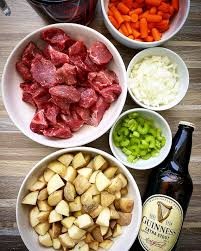
Here’s a delightful Guinness Beef Stew recipe that will warm your heart and impress your guests.
Ingredients:
2 tbsp vegetable oil
1 kg (2.2 lbs) braising steak, cut into 2.5 cm (1 in) chunks
2 onions
3 celery stalks
4 large carrots
1 liter (1¾ pints) beef stock (from stock cubes)
900g (2 lbs) potatoes
25g (1 oz) unsalted butter
Sea salt and freshly ground black pepper
Instructions:
Preheat the oven to 200°C (180°C Fan/Gas 6).
Brown the beef in batches in a large saucepan with 1 tablespoon of oil. Set aside on a plate.
In the same saucepan, sauté the chopped onions, celery, and carrots for 4–5 minutes until softened. Scrape any flavorful bits from the pan.
Mix the browned beef with the sautéed vegetables and transfer to a large ovenproof dish.
Pour the beef stock over the meat and veggies.
Peel and slice the potatoes into ½ cm (¼ in) thick slices. Arrange them over the top of the beef.
Dot the butter over the potatoes, then cover tightly with foil.
Bake for 1 hour, remove the foil, and bake for an additional 15 minutes until the potatoes are crisp and golden-brown.
Serve in deep bowls and savor the rich flavors!
Remember, the secret ingredient is patience—the oven will work its magic! If you prefer a slow cooker version, I can provide that too!
Enjoy your hearty stew!
I’doLoveThe Slow CookerVersion !
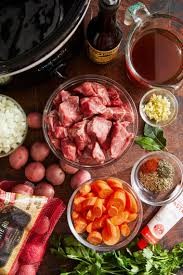
Here’s a cozy slow cooker version of Guinness Beef Stew that will fill your home with delightful aromas.
Ingredients:
2 tbsp vegetable oil
1 kg (2.2 lbs) braising steak, cut into 2.5 cm (1 in) chunks
2 onions, chopped
3 celery stalks, sliced
4 large carrots, peeled and sliced
1 liter (1¾ pints) beef stock (from stock cubes)
900g (2 lbs) potatoes, peeled and cubed
25g (1 oz) unsalted butter
Salt and pepper, to taste
Instructions:
Heat the vegetable oil in a large skillet over medium-high heat. Brown the beef chunks in batches until nicely seared. Transfer the beef to your slow cooker.
In the same skillet, sauté the chopped onions, celery, and carrots for about 5 minutes until softened. Add them to the slow cooker.
Pour the beef stock over the vegetables and beef.
Add the cubed potatoes to the slow cooker.
Season with salt and pepper.
Cover the slow cooker and cook on low for 7–8 hours or until the beef is tender and the flavors meld together.
Just before serving, dot the top with unsalted butter for extra richness.
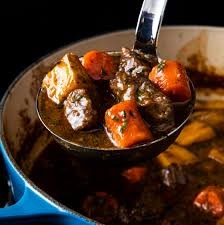
Ladle into bowls and enjoy this hearty Irish stew!
Remember, the slow cooker does all the work while you relax!
If you have any other requests or need more recipes, feel free to ask!
Click in the link below to get more recipes or just follow our page on Facebook < mr delicious recipe >
Serve the Foyot Sauce immediately, drizzled over your desired dish for an added touch of richness and flavor.
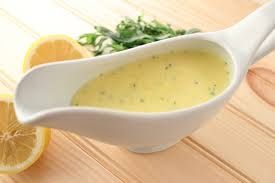
HOLLANDAISE SAUCE
Explore
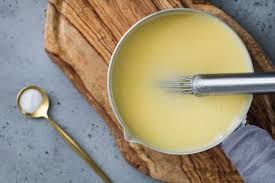
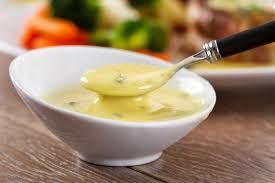
To make a classic Hollandaise sauce, you’ll need to create an emulsion of egg yolks, melted butter, and lemon juice. Here’s a step-by-step guide:
Ingredients:
3 large egg yolks
1 teaspoon of cold water
1 teaspoon of fresh lemon juice
A pinch of salt
A pinch of cayenne pepper (optional)
1/2 cup (113 grams) of unsalted butter
Preparation:
In a heatproof bowl, whisk together the egg yolks, cold water, lemon juice, salt, and cayenne pepper until smooth.
Cut the butter into small pieces and melt it in a saucepan over low heat. Be careful not to let it brown.
Cooking:
Place the bowl with the egg yolk mixture over a pot of simmering water (double boiler). The water should not touch the bottom of the bowl.
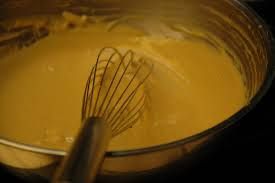
Gradually whisk the melted butter into the egg mixture, a little at a time, until the sauce begins to thicken and double in volume.
Continue whisking vigorously to prevent the eggs from scrambling and to achieve a smooth, creamy consistency.
Finishing:
Once the sauce has thickened to your liking, remove it from the heat.
Taste and adjust the seasoning, adding more lemon juice, salt, or cayenne pepper if needed.
If the sauce is too thick, you can whisk in a few drops of warm water to reach the desired consistency.
Serving:
Serve the Hollandaise sauce immediately, or keep it warm for a short period by placing the bowl in a pan of lukewarm water.
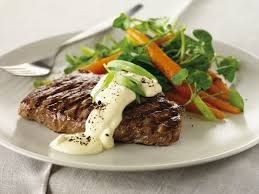
Hollandaise sauce is a delicate preparation that requires attention to temperature and constant whisking. It’s a wonderful accompaniment to vegetables, eggs, and fish, adding a rich and buttery flavor to any dish. Enjoy your cooking!
When making Hollandaise sauce, there are several common mistakes that can affect the outcome. Here are some to watch out for:















 HEALTHY MEALS