This infographic breaks down 5 guest personalities you’ll meet in hospitality + how to handle each. Core message at bottom: “Every guest is different, but every guest deserves respect, attention, and excellent service”
THE 5 TYPES EXPLAINED
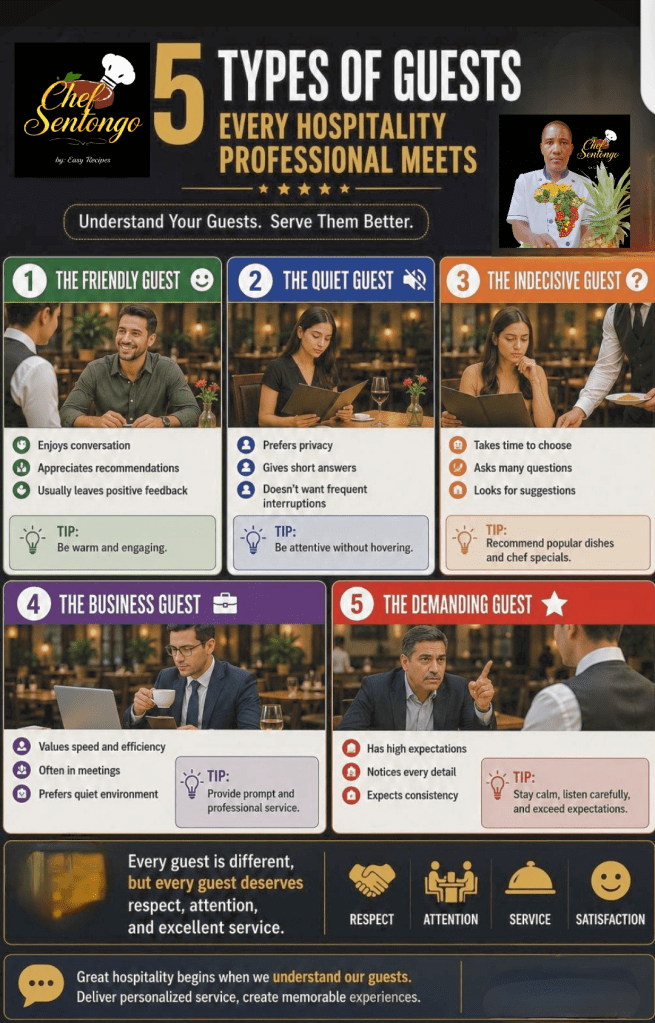
1. The Friendly Guest 😊
- Who they are: Chatty, makes eye contact, asks about your day. Wants connection, not just food/room.
- Traits: Enjoys conversation, loves recommendations, usually leaves 5-star reviews.
- How to serve: Match their energy. Be warm + engaging. Suggest dishes, share small talk. They’ll remember you.
2. The Quiet Guest 🔇
- Who they are: In their own world. Here to eat/sleep/work, not socialize.
- Traits: Prefers privacy, gives short answers like “yes/no”, doesn’t want you checking every 2 min.
- How to serve: Be attentive without hovering. Read cues. Refill water, then step back. Respect their space = respect earned.
3. The Indecisive Guest ❓
- Who they are: Menu paralysis. 10 min on 1 page, asks “what’s good?”, “what do you recommend?”
- Traits: Takes time to choose, asks many questions, looks for suggestions/ reassurance.
- How to serve: Don’t rush them. Recommend 2-3 popular dishes or chef specials. “Most guests love the X” helps them decide faster.
4. The Business Guest 💼
- Who they are: Laptop out, on calls, checking time. Hotel = office for them.
- Traits: Values speed + efficiency, often in meetings, needs quiet environment.
- How to serve: Provide prompt + professional service. Fast check-in, quiet table/room, WiFi that works. Skip small talk unless they start it.
5. The Demanding Guest ⭐
- Who they are: High expectations, notices everything – dust on table, slow service, wrong order.
- Traits: High expectations, spots every detail, expects consistency every visit.
- How to serve: Stay calm, listen carefully, don’t argue. Then exceed expectations. Fix issues fast + add small upgrade. They’re tough but become loyal if you nail it.
The 4 Rules at Bottom
- RESPECT: Treat all 5 the same baseline
- ATTENTION: Notice which type they are in first 30 seconds
- SERVICE: Adjust your style – chatty vs quiet vs fast
- SATISFACTION: Goal is same for all 5
Key takeaway: Great hospitality = personalized service. You don’t serve everyone the same way. You read the guest, then adapt.
Which type do you get most at your property in Juba? I can give you exact scripts for check-in for each one.
* > This poster from Chef Sentongo covers the 5 Dangerous Bacteria in Food every food pro must know. Header says it: “Would you eat food that contains dangerous bacteria… without even knowing it?”
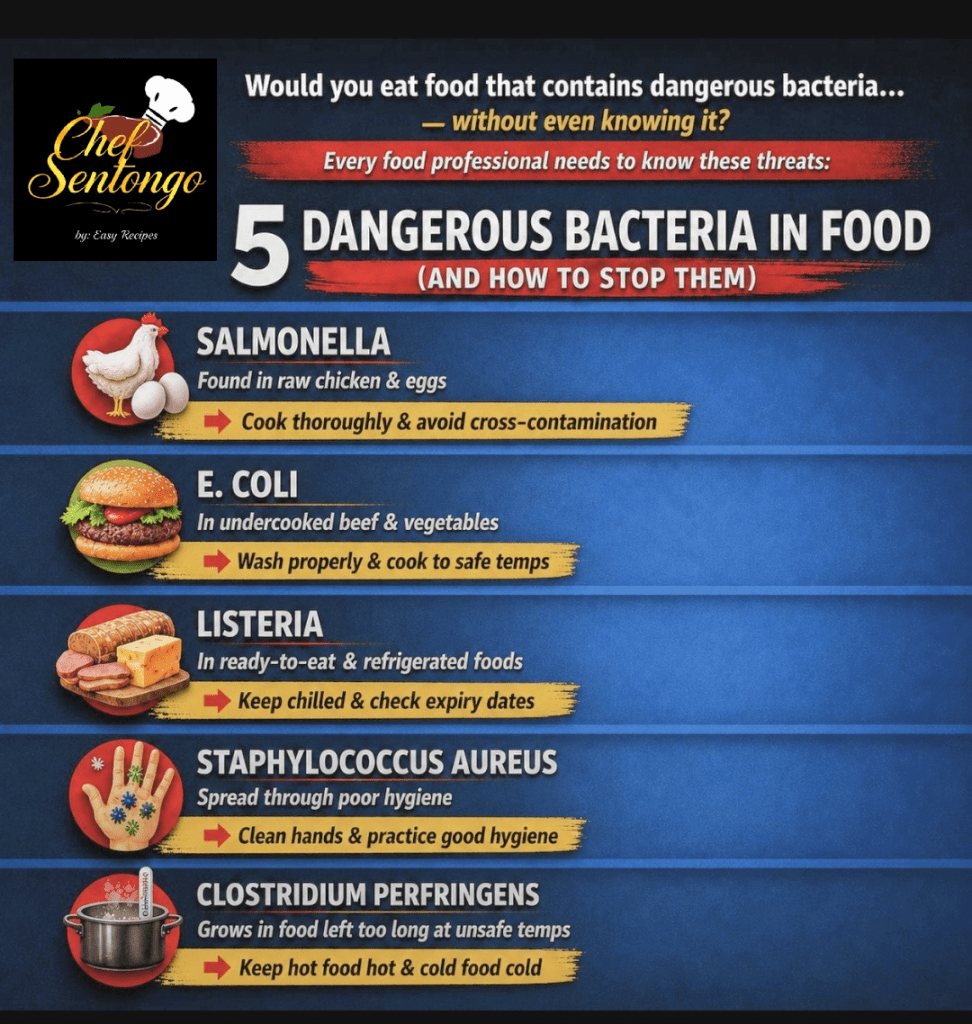
Here’s the breakdown + why they’re dangerous:
1. SALMONELLA 🐔🥚
- Found in: Raw chicken, eggs, raw milk
- Danger: Causes diarrhea, fever, stomach cramps 6-72hrs after eating
- How to stop: Cook thoroughly + avoid cross-contamination. Use separate boards/knives for raw chicken vs salad. Cook eggs till yolk is firm.
2. E. COLI 🍔🥬
- Found in: Undercooked beef, contaminated vegetables, unpasteurized juice
- Danger: Severe stomach pain, bloody diarrhea. Some strains can cause kidney failure.
- How to stop: Wash veg properly + cook beef to safe temps. For street food: burgers need 70°C+ inside, no pink.
3. LISTERIA 🧀🥪
- Found in: Ready-to-eat foods, deli meats, soft cheeses, refrigerated foods
- Danger: Worst for pregnant women, elderly, kids. Can cause miscarriage + meningitis. Grows even in fridge.
- How to stop: Keep chilled
4. STAPHYLOCOCCUS AUREUS ✋
- Found in: Spread through poor hygiene – from your hands, nose, cuts
- Danger: Toxin causes vomiting + diarrhea within 1-6hrs. Cooking won’t destroy the toxin once made.
- How to stop: Clean hands + practice good hygiene. Gloves, cover cuts, no touching face/hair while cooking.
5. CLOSTRIDIUM PERFRINGENS 🍲
- Found in: Food left too long at unsafe temps 5°C-60°C “danger zone”
- Danger: Abdominal cramps + diarrhea. Common in large batches of stew, rice, gravy kept warm all day.
- How to stop: Keep hot food hot >60°C + cold food cold <5°C. Cool leftovers fast. Don’t reheat rice/stew multiple times.
Golden Rule at bottom
You can’t see, smell, or taste these bacteria. So the 3 controls are:
- Temperature control – Cook hot, store cold
- Cross-contamination control – Separate raw + cooked
- Hygiene control – Clean hands, clean surfaces
For street food in Juba, #4 Staph + #5 Clostridium are biggest risks because of heat + holding food long.
Running a food stall? I can give you a simple daily hygiene checklist based on these 5.


Leave a Reply