Recipe by : chef ssentongo
* > That’s Honey Garlic Chicken Thighs — boneless thighs with a sticky, glossy glaze, flecks of black pepper and garlic, roasted garlic head on the side, fresh parsley. Sweet, savory, garlicky, with that lacquered look.
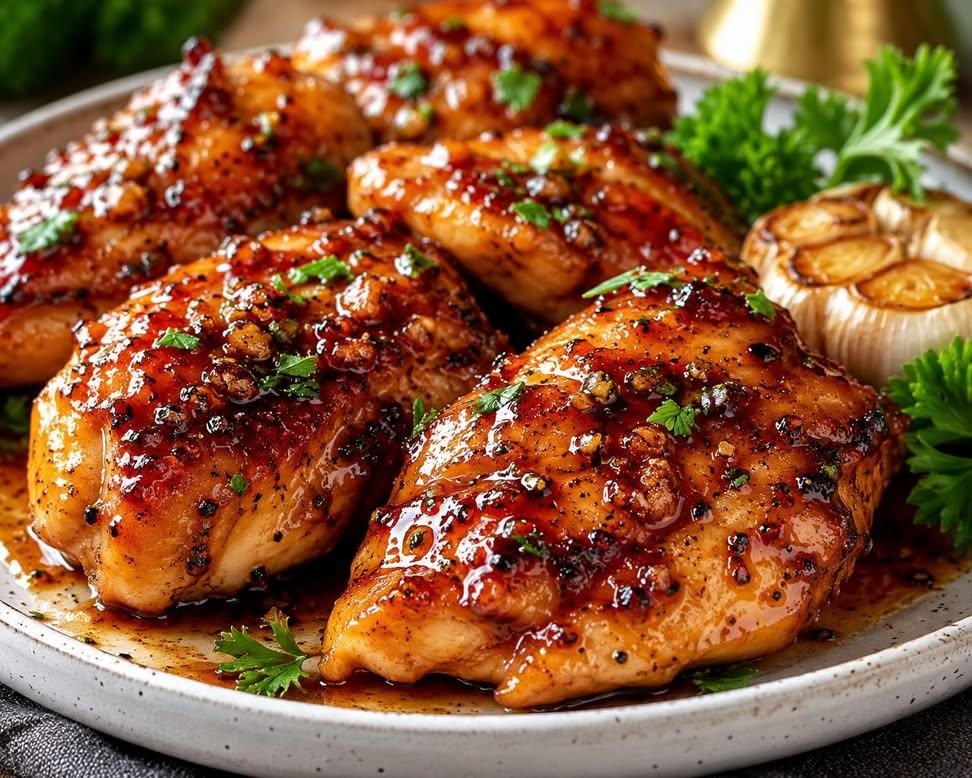
Sticky Honey Garlic Chicken Thighs
Serves 4 | Time: 10 min prep + 25 min cook
1. Ingredients
For the Chicken
- 8 boneless, skinless chicken thighs, ∼1kg
- 1 tsp salt
- 1 tsp black pepper, coarsely cracked
- 1 tsp garlic powder
- 1 tsp smoked paprika
- 2 tbsp olive oil
For the Honey Garlic Glaze
- 6 garlic cloves, minced — lots, like photo
- ⅓ cup honey
- ¼ cup soy sauce, low sodium
- 2 tbsp rice vinegar or apple cider vinegar
- 1 tbsp unsalted butter
- 1 tsp cornstarch + 1 tbsp water, for slurry
- ½ tsp chili flakes, optional
- ½ tsp black pepper, cracked
To Serve
- 1 head garlic, halved crosswise, roasted
- Fresh parsley, chopped
- Extra cracked pepper
2. Method
1. Season + sear: Pat thighs dry. Mix salt, pepper, garlic powder, paprika. Coat chicken. Heat oil in large skillet on medium-high. Sear thighs 5-6 min per side until deep golden and 70°C. Don’t crowd pan. Work in batches if needed. Remove to plate.
2. Make glaze: Pour off all but 1 tbsp fat. Lower heat to medium. Add minced garlic, sauté 45 sec until fragrant, not brown. Add honey, soy sauce, vinegar, chili flakes, pepper. Simmer 2 min. Stir cornstarch slurry, add to pan. Simmer 1-2 min until it coats spoon. Off heat, swirl in butter for gloss.
3. Glaze chicken: Return thighs to pan. Spoon sauce over constantly, 2-3 min, until glaze is sticky and lacquered like photo. Chicken should hit 74°C.
4. Roast garlic: While chicken cooks, drizzle garlic head with oil, wrap in foil, roast 200°C 25-30 min until soft and caramelized. Squeeze cloves over chicken or serve on side.
5. Serve: Plate thighs, pour extra glaze from pan on top. Shower with chopped parsley and extra cracked pepper. Roasted garlic on side.
3. Tips for the Photo Look
- Lacquered glaze: Cornstarch slurry + butter at end = thick, glossy, clingy sauce. Reduce until it’s syrupy. Toss chicken in pan so glaze coats every fold.
- Garlic bits: Mince, don’t grate. Small chunks stay visible in glaze like photo. Add to pan after searing so they don’t burn.
- Black pepper flecks: Use coarsely cracked, not fine ground. Add to dry rub and again in glaze. Visual contrast on amber sauce.
- Golden sear: Dry chicken + hot pan + don’t touch for 4 min. Maillard crust holds glaze better than pale chicken.
- Roasted garlic: Cut side up, oil, foil. Soft cloves = sweet, mellow, and look pro on plate.
- Parsley finish: Chop right before serving. Adds green pop against dark glaze. Heat wilts it.
4. Key Notes
Sauce too thin: Didn’t reduce or skipped slurry. Simmer until syrupy. Sauce thickens as it cools.
Burnt garlic: Added with chicken or heat too high. Sauté garlic 45 sec on medium after chicken is out.
Sugary burn: Honey added too early or heat too high. Sear chicken plain, glaze at end only.
Dry thighs: Overcooked. Thighs are safe at 74°C but best at 77-80°C — they have collagen. Don’t pull at 65°C like breast.
Glaze won’t stick: Wet chicken or no sear. Pat dry, hard sear first. Protein crust = sauce grip.
Too salty: Used regular soy + didn’t reduce. Low sodium soy + taste before adding extra salt.
5. Why This Works
Chicken thighs = 10-12% fat + connective tissue that stays juicy to 85°C, unlike breast. Salt + garlic powder in rub = dry brine effect for seasoning and better browning. High-heat sear = Maillard reaction at 140°C+ for savory crust. Garlic = allicin converts to sweet, nutty compounds when sautéed briefly. Honey = fructose caramelizes at 110°C for color; hygroscopic so it keeps meat moist. Soy sauce = glutamates for umami + salt; reduces to intensify. Vinegar = acetic acid balances honey’s sweetness and cuts fat. Cornstarch slurry = amylose gels when heated, thickening without clouding. Butter “monter au beurre” = emulsifies sauce, adds shine + body. Cracked pepper = piperine survives heat; coarse texture stays visible. Roasted garlic = slow heat converts harsh allicin to sweet S-allyl cysteine. Parsley = fresh aldehydes lift heavy glaze.
Chicken thighs vs breast: Thighs have more myoglobin and fat, so they’re flavorful and forgiving. Breast works but pull at 71°C and don’t sear as long or it dries.
Make it spicy: Add 1 tbsp sriracha or 1 tsp gochujang to glaze.
Sides: Jasmine rice, steamed broccoli, or mashed potatoes. Rice soaks up extra glaze.
No skillet: Bake 220°C 18 min, then broil with glaze 2-3 min. Won’t be as sticky but still good.
Want crispy skin-on version, or how to turn the pan sauce into noodles with the leftovers?
* > THAT’S BEEF FRIED RICE — glossy grains, seared steak chunks, fluffy scrambled egg, bright peas, diced carrots, red bell pepper, and green onion. Restaurant-style, but dead easy at home if you nail 2 things: cold rice and screaming hot wok.
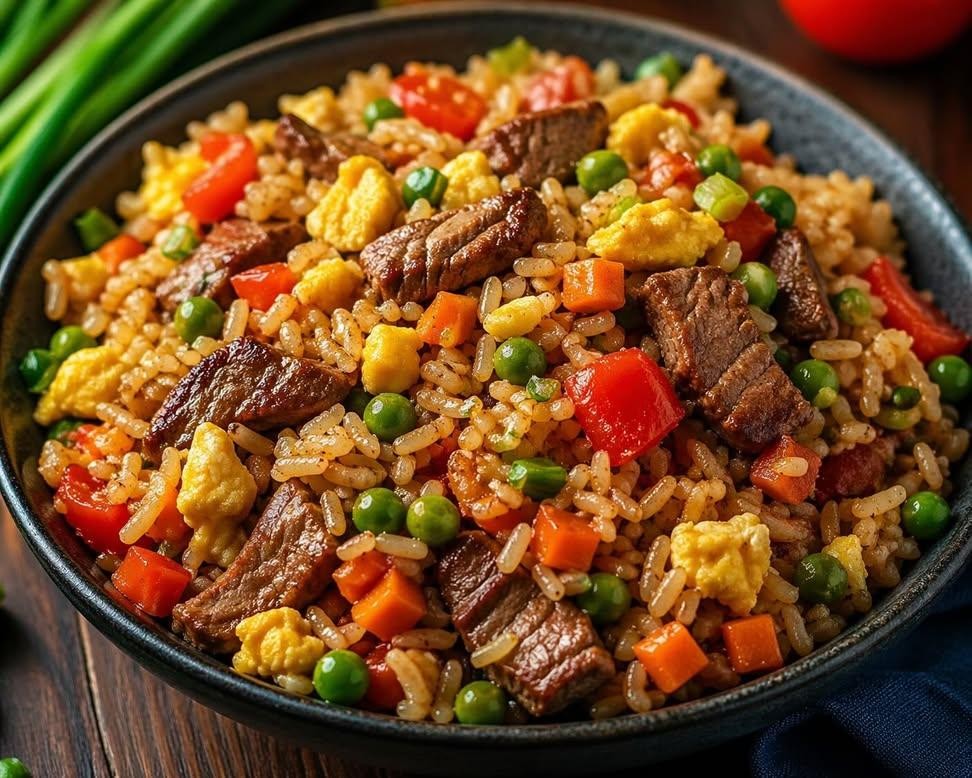
Steak Fried Rice
Serves 3-4 | Time: 15 min prep + 10 min cook | Key: Use day-old rice
1. Ingredients
For the Steak + Marinade
- 300g flank steak, sirloin, or ribeye, cut into 2cm cubes
- 1 tbsp soy sauce, low sodium
- 1 tsp sesame oil
- 1 tsp cornstarch
- ½ tsp baking soda — tenderizes
- ¼ tsp white pepper
For the Fried Rice
- 3 cups cooked jasmine rice, cold, day-old is best
- 2 tbsp neutral oil, like avocado or canola
- 3 large eggs, beaten with pinch salt
- ¾ cup frozen peas + carrots, thawed
- ½ red bell pepper, diced small
- 3 green onions, whites + greens sliced separate
- 3 garlic cloves, minced
- 1 tbsp fresh ginger, grated
For the Sauce
- 3 tbsp soy sauce, low sodium
- 1 tbsp oyster sauce
- 1 tsp sesame oil
- 1 tsp sugar
- ½ tsp white pepper
2. Method
1. Marinate beef: Toss steak with soy sauce, sesame oil, cornstarch, baking soda, white pepper. Rest 15 min. Baking soda = velveting trick for tender beef. Cornstarch = protects from overcooking.
2. Mix sauce: Whisk soy sauce, oyster sauce, sesame oil, sugar, white pepper. Set aside.
3. Prep rice: Break up cold rice clumps with fingers. Cold = dry surface = fry, not steam. Fresh rice turns to mush.
4. Cook egg: Heat wok or large skillet on high until smoking. Add 1 tbsp oil. Pour in eggs, scramble 30 sec until just set but soft. Remove to plate.
5. Sear beef: Add 1 tbsp oil to smoking wok. Add beef in single layer. Don’t touch 1 min to get sear like photo. Stir-fry 1-2 min until 80% done. Remove to plate.
6. Fry veg: Add garlic, ginger, green onion whites to wok 30 sec. Add peas, carrots, bell pepper. Stir-fry 1 min. You want bright color, not mushy.
7. Toast rice: Push veg to side. Add rice, break up with spatula. Fry 3-4 min until grains jump and smell toasty. High heat = prevents sticking.
8. Bring it together: Add sauce around edges of wok — it caramelizes on hot metal. Toss 1 min. Add beef + egg back in, plus green onion greens. Toss 1 min until everything’s hot and glossy like photo. Taste for salt.
3. Tips for the Photo Look
- Separate grains: Day-old rice dried in fridge overnight. Spread fresh rice on sheet pan, chill 1 hour if you’re rushed. Clumpy = bad.
- Beef sear: Pat steak dry before marinade. Smoking hot wok + don’t move for 60 sec. Those brown edges in photo need 230°C+.
- Egg curds: Soft scramble, remove early. Add back at end so they stay yellow and fluffy, not brown.
- Color pop: Red bell pepper + peas stay bright if cooked 1 min only. Frozen peas are better than canned — hold shape.
- Gloss: Sauce + high heat = each grain coated but not wet. If it looks oily, you used too much oil. If pale, not enough soy.
- Wok hei: That smoky “breath of wok” flavor. Home stove can’t do it fully, but smoking hot pan + don’t overload gets you 80% there.
4. Key Notes
Mushy rice: Used fresh/warm rice or too much sauce. Cold rice, high heat, 3 tbsp sauce max for 3 cups rice.
Bland: Under-salted or skipped oyster sauce. Oyster sauce = umami depth. Taste before serving, add soy ½ tsp at a time.
Tough beef: Skipped baking soda or overcooked. Velveting is key. Pull beef at medium, it finishes in final toss.
No sear on steak: Pan not hot, or crowded. High heat + single layer. Cook in 2 batches if needed.
Soggy veg: Added frozen veg without thawing or cooked too long. Thaw + pat dry. 1 min stir-fry only.
Sticks to pan: Pan not hot enough before adding oil, or used stainless not seasoned. Nonstick or carbon steel wok is easiest.
5. Why This Works
Day-old rice = retrograded starch crystals on surface resist absorbing more water, so grains fry instead of steam. Baking soda + cornstarch = velveting: alkaline pH denatures surface proteins for tenderness, cornstarch seals in juice. High heat = Maillard reaction on beef and rice for 100s of flavor compounds. Oyster sauce = glutamates + nucleotides for umami; sugar balances salt. Sesame oil added at end = volatile compounds survive, giving aroma. Ginger + garlic = alliinase enzymes create pungent flavor in oil. Eggs added separately = stay tender vs cooking with wet rice. Peas + carrots + bell pepper = textural contrast + chlorophyll/carotenoids for color. White pepper = piperine for heat without black specks. Finishing with green onion greens = fresh allium bite without harshness.
Best beef cuts: Flank, skirt, or sirloin. Tender + beefy. Ribeye if you’re feeling rich. Avoid stew meat — too tough.
No wok: Large 30cm skillet, cast iron or stainless. Heat 5 min before cooking. Cook in batches so pan stays hot.
Vegetarian: Skip beef, double egg or add 200g crispy tofu. Use mushroom soy sauce for depth.
Leftovers: Fried rice is better next day. Reheat in screaming hot pan 2 min with splash water to re-steam.
Want pineapple beef fried rice version, or how to velvet chicken for chicken fried rice instead?
* > THAT’S PASTA E FAGIOLI — Italian “pasta and beans” soup. This version has ground turkey, kidney beans, chickpeas, small shells, celery, carrots, and tomato broth. Hearty, healthy, one-pot comfort food.
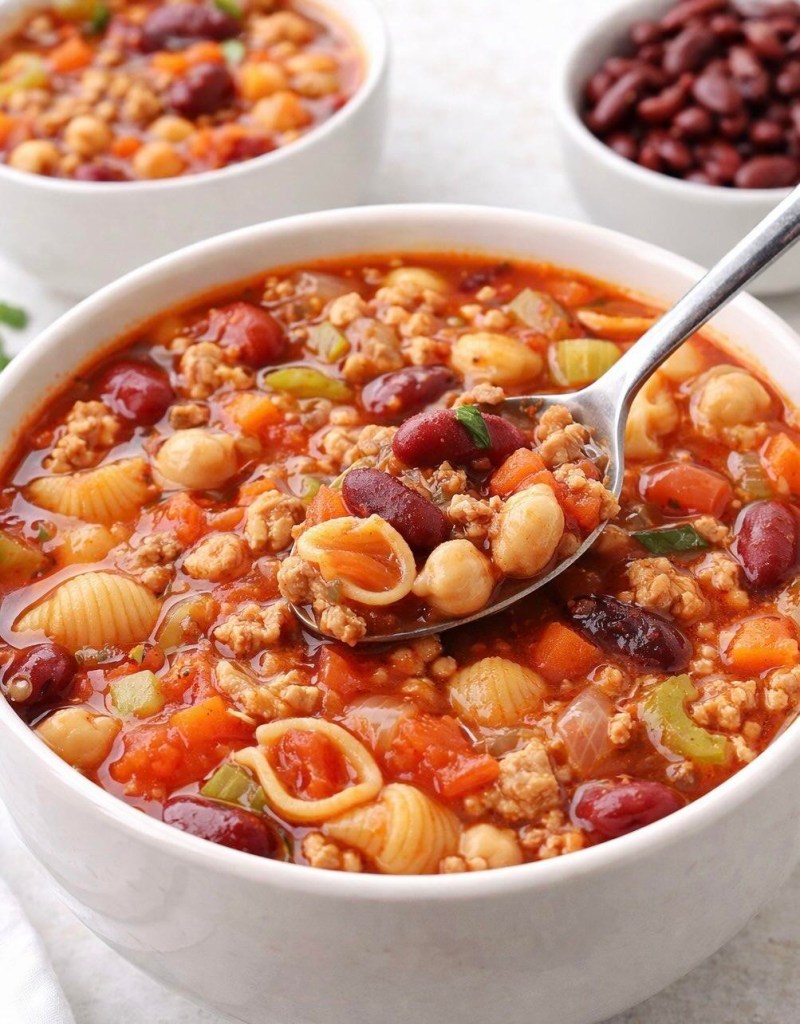
Turkey Pasta e Fagioli
Serves 6-8 | Time: 15 min prep + 35 min cook
1. Ingredients
For the Soup Base
- 2 tbsp olive oil
- 500g ground turkey or chicken, 93% lean
- 1 tsp salt, ½ tsp black pepper
- 1 large yellow onion, diced
- 2 carrots, diced small
- 2 celery stalks, diced small
- 4 garlic cloves, minced
- 2 tbsp tomato paste
- 1 tsp dried oregano
- 1 tsp dried basil
- ½ tsp red pepper flakes, optional
- 1 bay leaf
For the Broth + Fillings
- 800g canned crushed tomatoes
- 6 cups chicken stock, low sodium
- 1 can kidney beans, 400g, drained + rinsed
- 1 can chickpeas, 400g, drained + rinsed
- 1 cup small pasta shells, ditalini or elbows work too
- 1 tbsp balsamic vinegar — secret depth
- Salt + pepper to taste
To Finish
- ¼ cup fresh parsley, chopped
- Grated Parmesan, for serving
2. Method
1. Brown turkey: Heat oil in large Dutch oven on medium-high. Add turkey, salt, pepper. Break up with spoon and brown 5-6 min until no pink and you get some caramelized bits. Flavor comes from browning. Remove to bowl.
2. Build soffritto: Same pot, add onion, carrot, celery. Sauté 6-8 min until softened, not browned. Add garlic, tomato paste, oregano, basil, chili flakes. Cook 2 min until paste turns rusty red. Tomato paste cooked = less acidic, more depth.
3. Simmer: Add crushed tomatoes, stock, bay leaf, browned turkey back in. Bring to boil, reduce to simmer. Cook 15 min uncovered.
4. Beans + pasta: Add kidney beans, chickpeas, dry pasta. Simmer 10-12 min until pasta is al dente. Stir often so pasta doesn’t stick. Soup thickens as pasta releases starch.
5. Finish: Off heat, remove bay leaf. Stir in balsamic vinegar. Taste for salt — beans and stock vary. Broth should taste rich, not watery.
6. Serve: Ladle into bowls. Top with parsley and big handful of Parmesan. Parmesan rind simmered in pot is great if you have it.
3. Tips for the Photo Look
- Broth clarity: Don’t boil hard after adding pasta. Gentle simmer keeps broth red and clear, not cloudy like photo.
- Visible chunks: Dice carrot + celery small, 0.5cm. They match bean size so every spoonful looks balanced.
- Shell pasta: Small shells or ditalini hold broth inside. Cook just to al dente — they keep soaking up liquid in bowl.
- Two beans: Kidney + chickpeas give color contrast. Rinse canned beans so broth doesn’t turn muddy.
- Ground turkey texture: Don’t over-break it. Leave some small clumps like photo, not powder.
- Parsley pop: Fresh parsley added at end stays bright green. Dried parsley turns grey.
4. Key Notes
Mushy pasta: Added too early or boiled too hard. Add pasta last 12 min only. If making ahead, cook pasta separately and add to bowls.
Bland broth: Under-salted, no tomato paste, or skipped browning turkey. Salt in layers. Tomato paste + browning = umami.
Watery soup: Not enough tomato paste or simmered too short. Paste thickens. Simmer 15 min before adding pasta.
Greasy: Used 85% lean turkey. 93% lean or drain fat after browning.
Beans split: Added too early and boiled hard. Gentle simmer, add with pasta.
Acidic: Crushed tomatoes vary. Balsamic + ½ tsp sugar balances. Parmesan also adds richness.
5. Why This Works
Ground turkey = lean protein, browning creates Maillard compounds for savory base. Soffritto = onion/carrot/celery mirepoix gives sweet aromatic backbone. Tomato paste = concentrated glutamates + lycopene; cooking it removes raw tinny flavor. Crushed tomatoes = acid + body. Chicken stock = gelatin + salt for mouthfeel. Kidney beans + chickpeas = two textures and colors; fiber + plant protein make it hearty. Pasta starch = thickens broth naturally so it coats spoon. Balsamic = acetic acid brightens and adds caramel notes via reduction. Bay leaf = eucalyptol for subtle background. Parmesan = aged umami bomb, tyrosine crystals for texture. Parsley = fresh aldehydes cut richness.
Traditional vs this: Classic Pasta e Fagioli is often vegetarian with pancetta. This American version uses turkey for protein and adds chickpeas for texture. Olive Garden style, but better.
Make ahead: Soup base without pasta keeps 4 days fridge, 3 months freezer. Add pasta when reheating or it goes mushy.
Vegetarian: Skip turkey, use 2 cans beans + 1 cup diced zucchini. Add 1 tbsp miso or soy sauce for umami. Use veg stock.
Thicker: Mash ½ cup beans against pot side and stir in. Starch thickens naturally.
Serving: Crusty bread is mandatory. Grilled cheese on side makes it a meal.
Want slow cooker version for set-and-forget, or spicy Italian sausage swap for more flavor?

 HOME COOKING
Leave a comment